A calendar can help you notice an occasion. It cannot tell you how every colleague observes it, or whether they want to celebrate it at work.
Start by asking what would be welcome. Offer a private way to contribute ideas and make participation optional. Nobody should be expected to organise an event or explain their faith or heritage simply because it is part of their background.
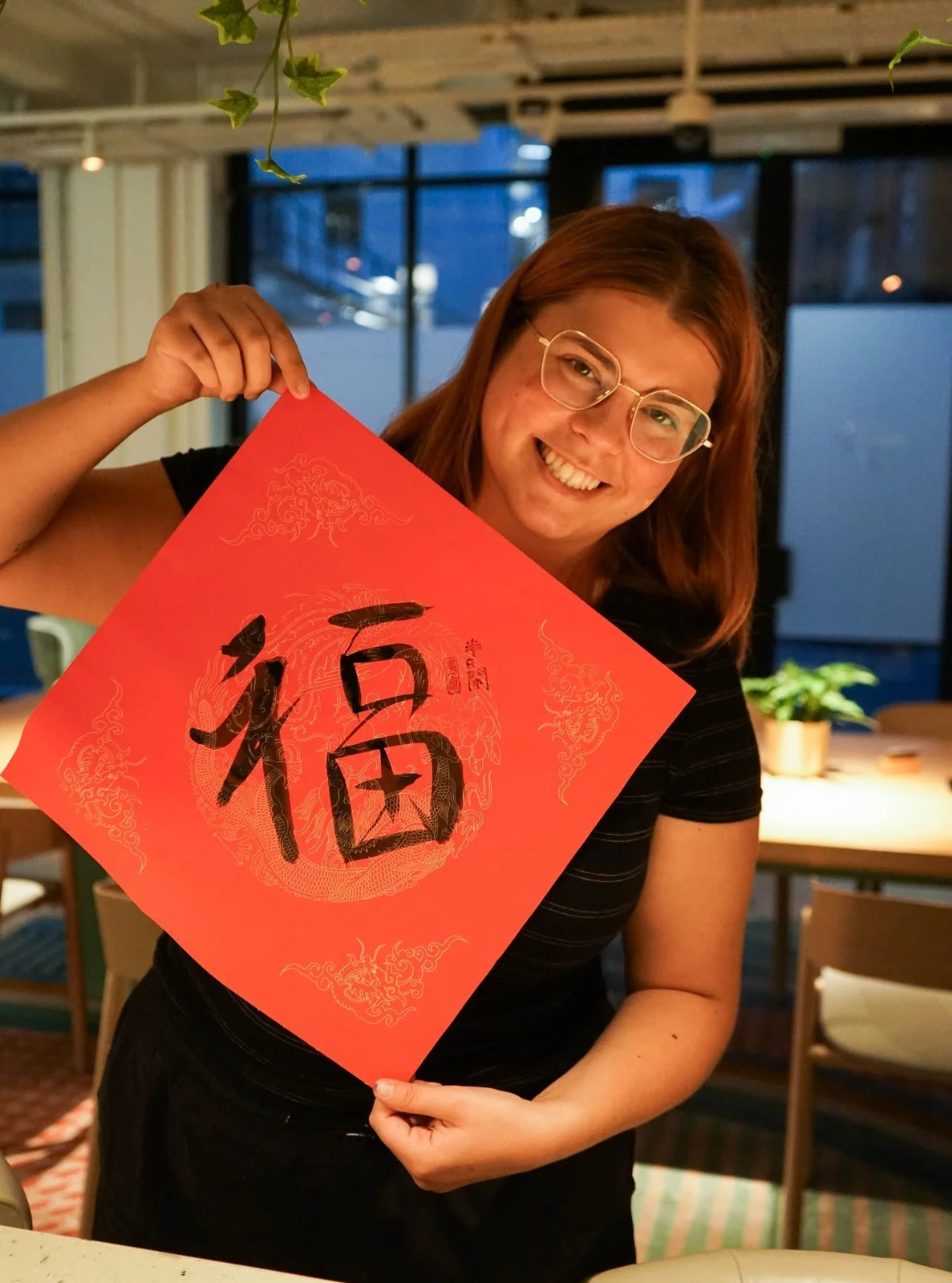
A workshop participant with her finished fu (good fortune) calligraphy.
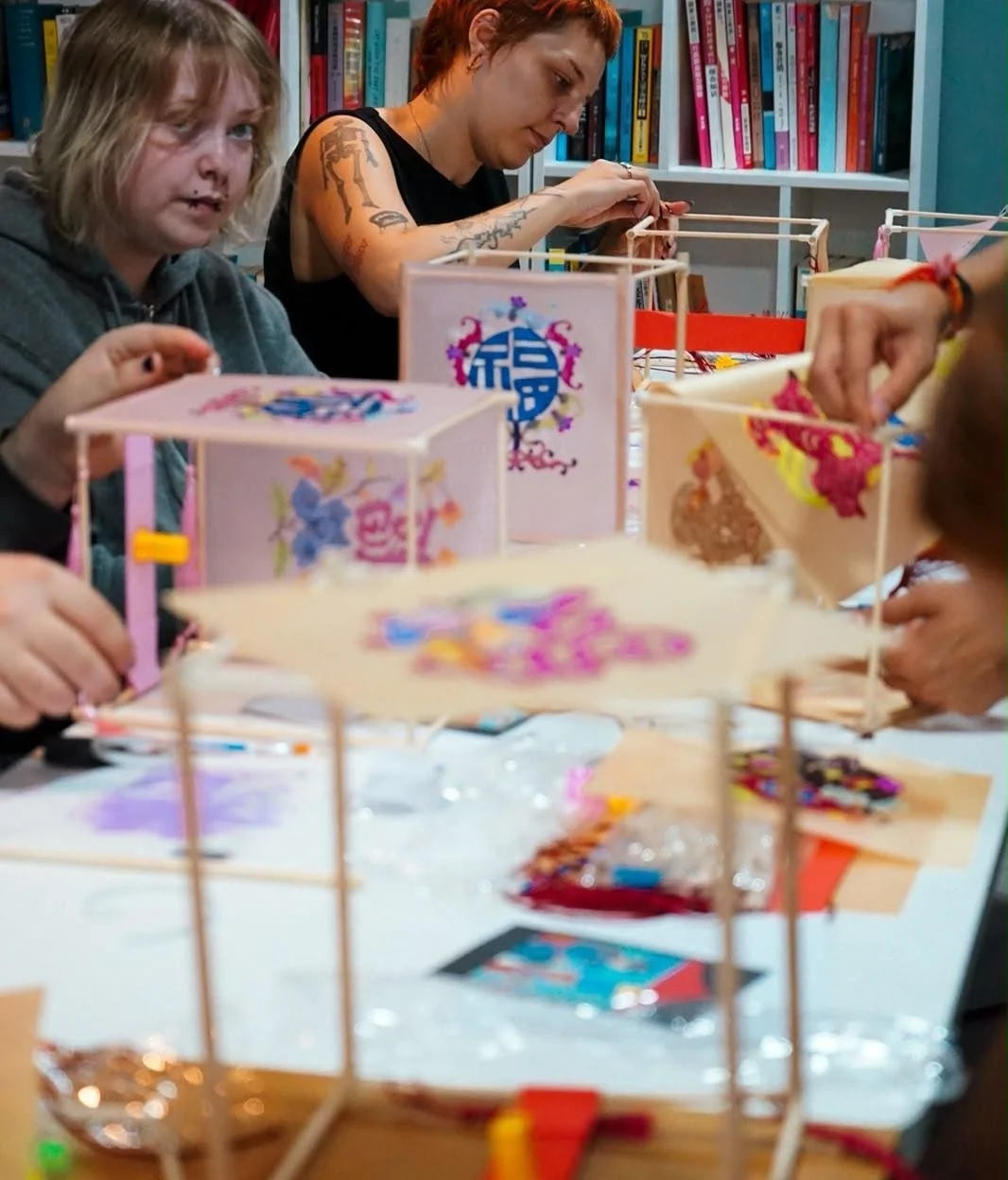
Participants painting and decorating paper lanterns.

Dumplings cooking in a pan.
Choose a thoughtful format
Food, making and a conversation with an experienced host can give colleagues an inviting way to learn. Let the person leading the activity explain their own practice. Avoid presenting one dish or tradition as the experience of a whole country or community.
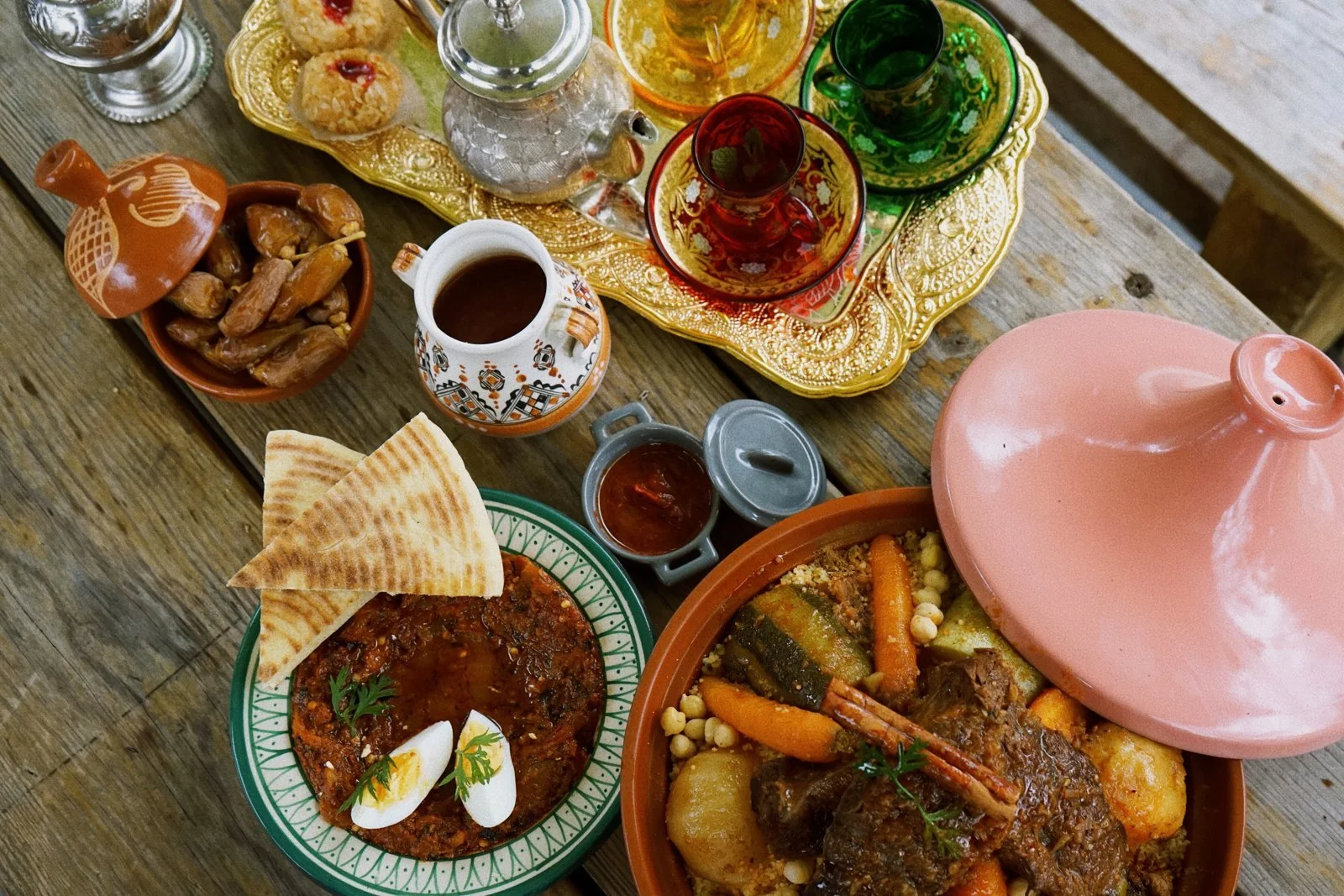
Shared dishes, tea and dates
Check the practical details
Confirm the relevant date for the year and community you are planning with. Consider fasting, prayer, access needs and working patterns before choosing the time. For a food event, confirm dietary requirements and preparation arrangements directly with the caterer.
Give the host a useful brief
Share the purpose, audience, venue and how much time people have. Ask what context the host will provide and whether the activity needs a shared start. A small, well-explained gathering can be more welcoming than a packed programme.
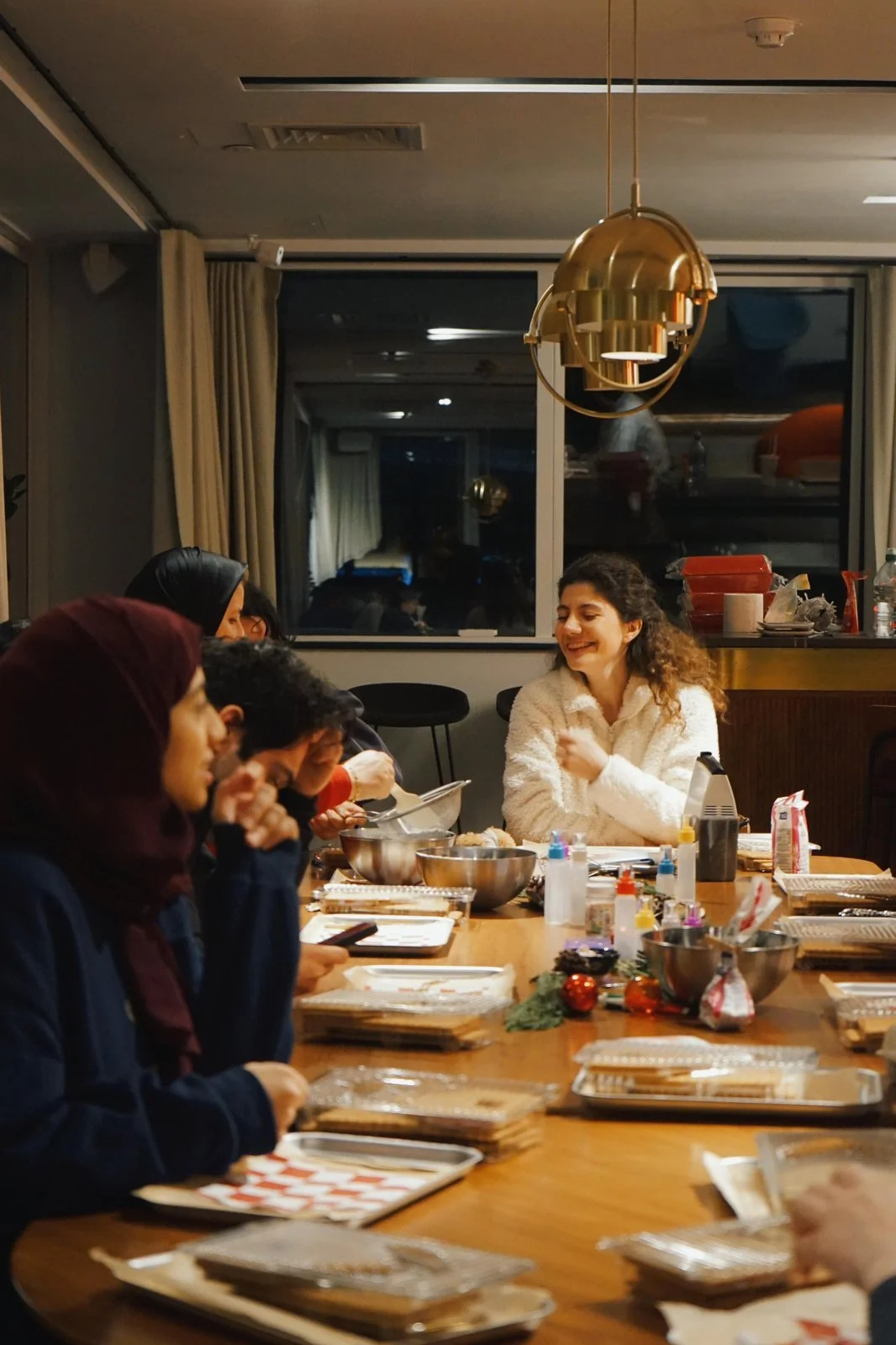
A workshop table set with icing bottles and decorating trays.
See our seasonal workshops for current ideas. Availability, format and suitability should be confirmed before an invitation goes out.